
225kg
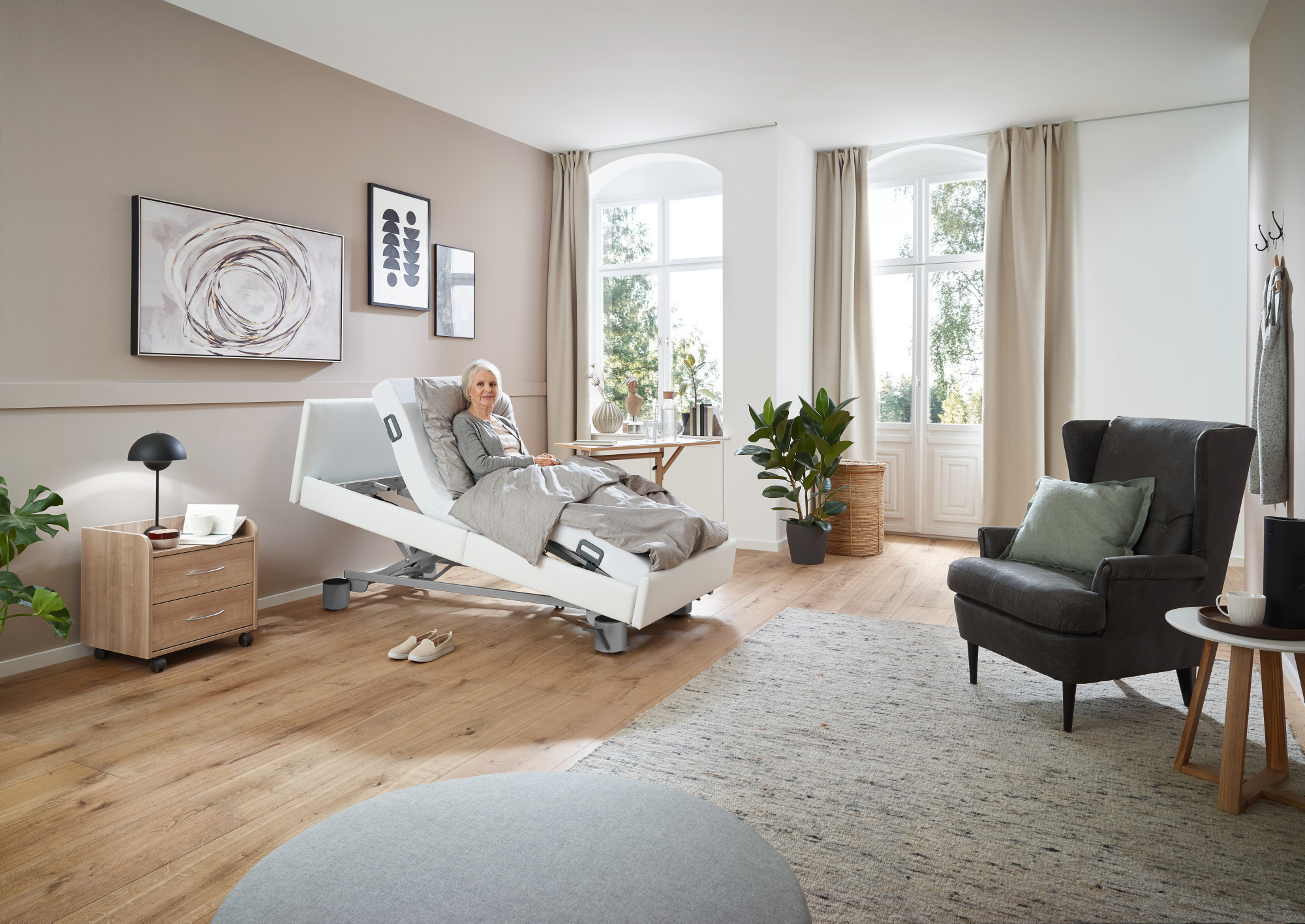
The comfortable, visually appealing Regia, a low-height bed with split safety sides, protects against fall injuries without restricting mobility. It sets the highest standards in the field of beds for private customers and is also available as Regia partner in a practical double bed version. Height adjustment range 26 - 80 cm Safe working load 225 kg Optional 100 cm mattress base width Homelike wood decors and headboard/footboard designs Also available as a comfortable double bed version
▶Watch it in actionSpecifications & funding report dataWarranty, ISO, ARTG, service life and lead times — everything for your report↓From the manufacturer
The two things worth drawing out on the Regia are its low height and its split safety sides, and the second of those is a restraint question rather than a feature. **Low height** is a falls intervention. Where a client is at risk of falling from bed, the two available approaches are opposite in character: raise a barrier, or remove the height. Bed rails are a restraint and an entrapment hazard, and they do not prevent falls — they convert a roll onto the floor into a climb over a barrier, so the person falls further and often head-first. Lowering the bed reduces the distance fallen and therefore the injury, without restraining anyone. Where a restraint-minimisation approach is required — which is now the expectation in Australian aged care — a low bed is the intervention that satisfies it, and framing it that way is stronger than describing it as a feature. **Split safety sides** sit between the two approaches, and the distinction matters. A full-length rail that prevents a client leaving the bed is a restraint and attracts the assessment, documentation and consent requirements that go with one. A split side that covers only part of the bed length — typically the upper section — gives the client something to hold for repositioning and rolling while leaving the lower half open to exit from. That is a mobility aid rather than a barrier, and for a client who can still transfer independently it supports their function instead of restricting it. Be explicit in the record about which of those you are prescribing and why. "Split sides for repositioning support, exit intentionally left unobstructed" is a materially different clinical decision from "rails to prevent exit", and it should be documented as such. Stiegelmeyer also design the Regia to look domestic rather than clinical, which is not vanity — a bed the client refuses because of how it makes their bedroom feel is a bed that delivers nothing. Confirm current height range, capacity, safe working load and side-rail configurations with the supplier before quoting.
We aim to make our range as accessible as possible. Some products may not be available in all areas — please contact BMS Plus to confirm availability and discuss suitable options.
Product detail

Everything needed to justify this equipment in an NDIS, DVA or Home Care Package report.