
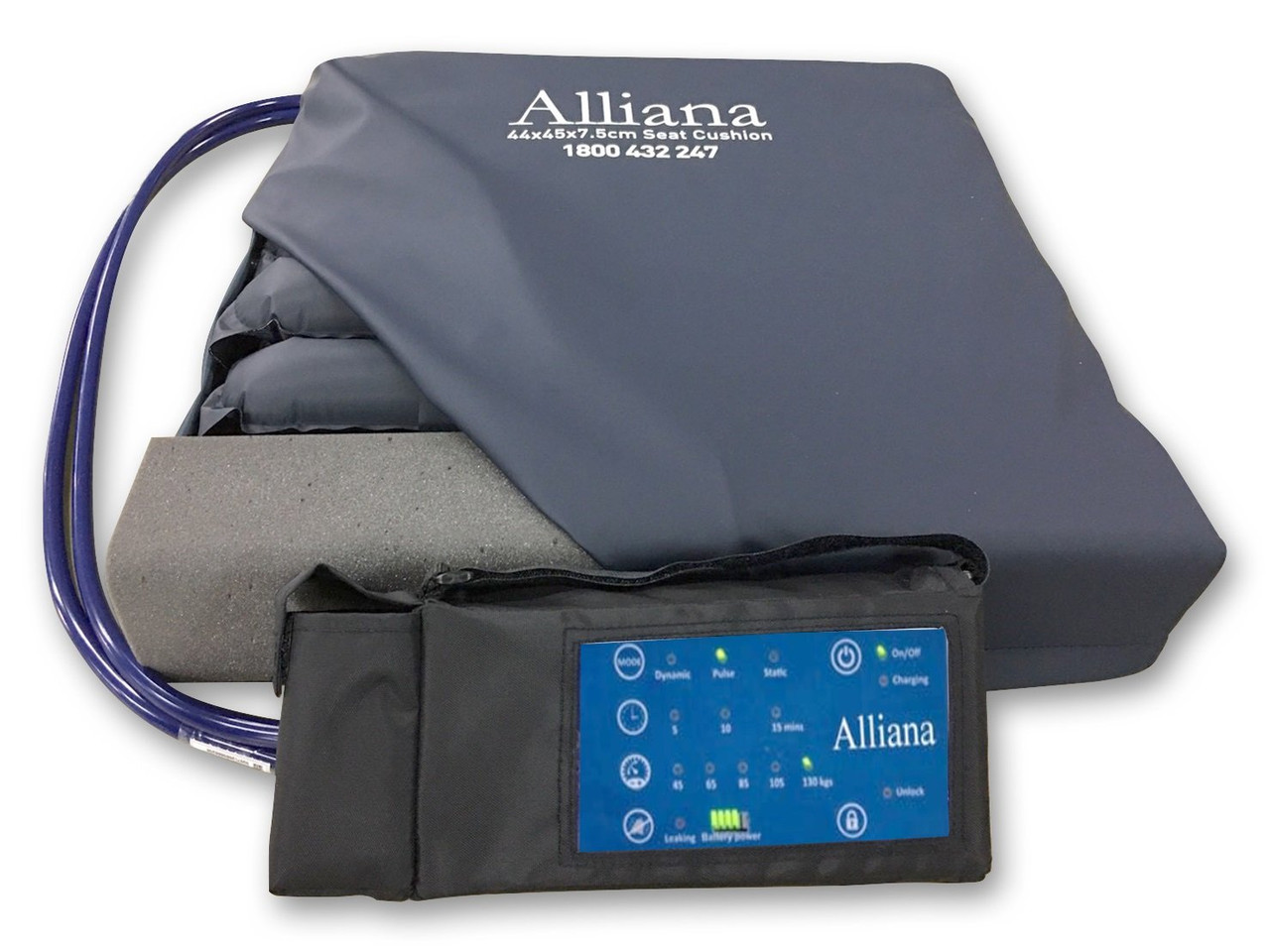
A clinically effective, portable solution for pressure injury prevention, the Alliana cushion actively alternates support to high-risk areas, promoting circulation ad comfort. Designed for all-day use with hassle-free maintenance, it's the go-to choice for mobility-limited users.
▶Watch it in actionSpecifications & funding report dataWarranty, ISO, ARTG, service life and lead times — everything for your report↓From the manufacturer
Most alternating-air seat cushions have the same practical failure: they tether the client to a power point. A cushion that only works while plugged in is a cushion the client sits off for most of the day, which defeats the purpose of prescribing an active surface at all. The Alliana cushion runs on an onboard pump with a published 14-hour battery life, driving six soft polyurethane air cells. That is a full waking day away from mains power — in the car, at an appointment, at work, out in the community. For a client whose pressure risk is highest precisely when they are out and sitting still for long stretches, that is the feature carrying the clinical argument, and it is worth stating plainly in a submission rather than burying it under "portable". Three modes are offered — alternating, pulsating and static. Alternating cycles cells to periodically fully offload tissue; pulsating gives gentler, smaller pressure variation for clients who find full alternation uncomfortable or who have pain or spasticity provoked by it; static holds the surface constant, which is what you want during transfers and for stability while driving a chair. The distributor rates it across low to very high risk. The pump is described as ultra-quiet, which matters more than it sounds: audible pump noise is a common reason clients switch an active surface off in social settings or at night. It fits most standard chairs, so it can go onto a lift recliner, a dining chair or a wheelchair rather than being tied to one seat. One caution: an alternating cushion redistributes load, it does not substitute for repositioning or for addressing the underlying seating posture. Where the client is in a posterior pelvic tilt or sacral sitting, fix the seating first — an active cushion under a bad posture still loads the sacrum.
We aim to make our range as accessible as possible. Some products may not be available in all areas — please contact BMS Plus to confirm availability and discuss suitable options.
Product detail
Everything needed to justify this equipment in an NDIS, DVA or Home Care Package report.